Introduction
In the world of shipping and e‑commerce, packaging is both an art and a science. The box you choose and the void fill you add determine whether your product arrives in perfect condition or becomes an expensive return. Using too much void fill creates waste, drives up shipping costs and undermines sustainability goals, whereas using too little leaves empty space, allowing items to jostle and break.
This balancing act matters: research compiled by shipping and packaging analysts shows that roughly 20 % of e‑commerce returns are caused by products arriving damaged. At the same time, Canadians discarded nearly 5 million tonnes of plastic in 2021, and packaging represented more than 43.8 % of the plastic that leaked into the environment. With the federal government requiring plastic packaging to contain at least 50 % recycled content by 2030 and a national waste‑reduction goal to cut per‑person waste to 490 kg by 2030 and 350 kg by 2040, businesses need smarter, more sustainable packaging practices.
Void fill solutions today include both renewable paper pads and lightweight air pillows with recycled or bio-based content, each offering unique advantages depending on the type of product and shipping volume. This guide helps procurement managers, warehouse and shipping managers and sustainability officers in Canada answer the question: how much void fill do you actually need? It introduces standard box sizes, explains how to calculate void fill and daily volume, compares FROMM’s high-efficiency void fill machines and shows how the right void fill improves both the bottom line and environmental performance.
What Is Void Fill and Why It Matters
Void fill refers to the material used to fill empty space inside a shipping box. Whether it is crumpled paper, air pillows, bubble wrap or biodegradable peanuts, void fill keeps products from rattling around during transport and distributes shocks when packages are dropped or jostled. In industries ranging from e‑commerce to pharmaceuticals and automotive parts, choosing the right void fill is critical. Insufficient void fill leads to product damage, frustrated customers and costly returns; excess void fill wastes materials, increases box size and shipping costs and hurts the environment. The challenge of finding the right balance is evident: product damage during transit drives roughly one fifth of e‑commerce returns, and packaging is a major source of plastic leakage into Canada’s environment.
Why choosing the right void fill matters for managers
For procurement managers, void fill decisions influence cost per box, shipping efficiency and long‑term ROI. Warehouse and shipping managers need void fill machines that integrate seamlessly into packing lines and speed up throughput. Sustainability managers demand recyclable or renewable materials that align with extended producer responsibility regulations and reduce waste.
Paper void fill is an attractive option because it is made from renewable fibres and supports recycling. Made in CA reports that about 96 % of Canadians have access to paper and cardboard recycling facilities, and the national recovery rate for corrugated boxes is 85 %. Air pillows are also a strong option for many shippers: they provide a high cushioning-to-weight ratio, are produced on demand to save storage space, and FROMM’s AP1000 can run films that include recycled or bio-based content.
Using paper void fill or recyclable air pillows not only protects products but also helps companies meet both operational efficiency and sustainability goals.
Common Shipping Box Sizes in Canada
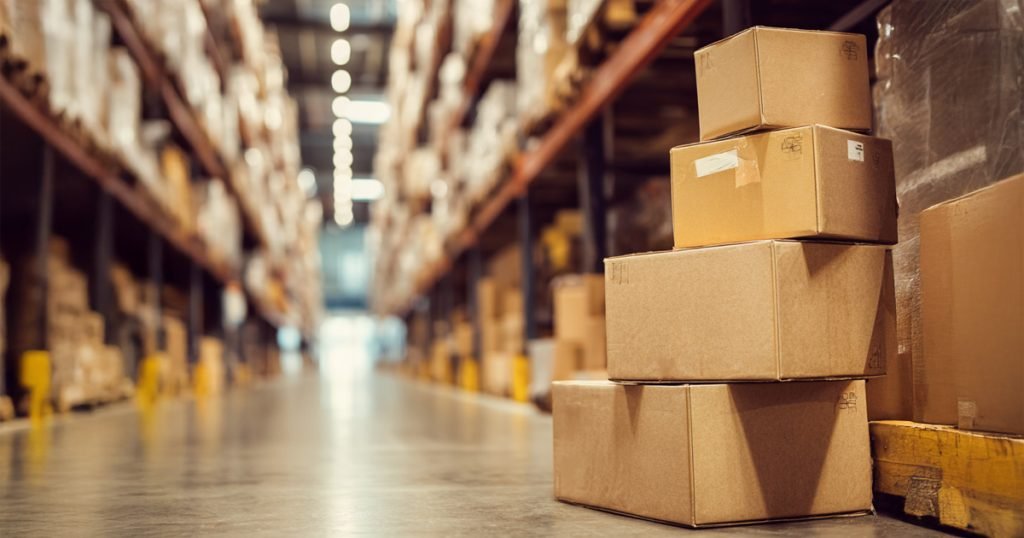
Before calculating how much void fill you need, start with the right box size. Standard shipping boxes follow universal length × width × height dimensions used by couriers worldwide. Selecting a box that is only slightly larger than your product minimises empty space, reduces dimensional weight charges and lowers material consumption. Table 1 summarises some of the most common box sizes used for Canadian shipments, adapted from Guka Packaging’s global reference list. Among these, the 18 × 18 × 16 inch box is considered the most versatile size for mid‑sized shipments across industries.
Table 1: Common shipping box sizes
| Box size | Dimensions (inches / cm) | Common uses |
| Small cube | 4 × 4 × 4 / 10.2 × 10.2 × 10.2 | Jewellery, candles, small items |
| Medium cube | 6 × 6 × 6 / 15.2 × 15.2 × 15.2 | Cosmetics, accessories |
| Long rectangular | 12 × 6 × 6 / 30.5 × 15.2 × 15.2 | Skincare sets, tools |
| Book box | 16 × 12 × 12 / 40.6 × 30.5 × 30.5 | Books, CDs, canned goods |
| Medium moving (versatile) | 18 × 18 × 16 / 45.7 × 45.7 × 40.6 | Electronics, apparel |
| Large moving | 18 × 18 × 24 / 45.7 × 45.7 × 61.0 | Linens, kitchen items |
| Extra large | 24 × 18 × 24 / 61.0 × 45.7 × 61.0 | Pillows, comforters |
Selecting the appropriate size reduces the amount of void fill needed. For example, shipping a pair of shoes in a box only slightly larger than the shoebox reduces empty space and the amount of filler required. Conversely, oversized boxes waste material and increase shipping costs.
How Much Void Fill Do You Really Need?
Once you have the right box, determine how much void fill you need by considering both box size and daily shipping volume. An easy way to think about void fill is to categorise shipments by size and volume, then match them with the appropriate equipment whether it produces recyclable paper pads or lightweight air pillows.. Table 2 summarises typical box categories, daily volume ranges and recommended FROMM solutions. Aligning the machine to your shipping volume helps you maximise ROI, save materials and avoid over or under‑filling.
Table 2: Void fill recommendations by box size and volume
| Box category | Common uses | Daily volume | Recommended machine | Key advantage |
| Small box | Books, DVDs, small electronics | Low to Medium (<150 bundles/year) | PC1000 or AP1000 | Flexible on‑demand paper pads, precise lengths |
| Medium box | Shoes, toys, kitchen items | Medium to High (150–300 bundles/year) | PC100 | High‑speed output (~60 m/min), cost‑effective for busy warehouses |
| Large box | Bedding, bulky household goods | Medium to High (150–300 bundles/year) | PC100 | Efficient fill for large empty spaces, reduces material usage |
| Special box (TV, picture, wine) | Flat screens, artwork, fragile glassware | Low to Medium (<150 bundles/year) | PC1000 | Compact cushioning for fragile items, bladeless and safe |
| High‑volume operations | Mixed packaging in 3PLs or marketplaces | High (>300 bundles/year) | AP1000 | Fully automatic, continuous production, minimal labour |
SmartFill technology in FROMM machines automatically measures the required fill for each box, reducing material consumption by up to 50 % compared with traditional systems and saving roughly four hours of labour per thousand packs (internal study). By aligning machine capacity with your annual bundle count, you can choose the PC1000 or AP1000 for operations shipping fewer than 150 bundles per year, the PC100 for 150 to 300 bundles, and the AP1000 for more than 300 bundles. This approach helps you control costs, optimise throughput and avoid material waste.
Comparing PC100, PC1000 and AP1000
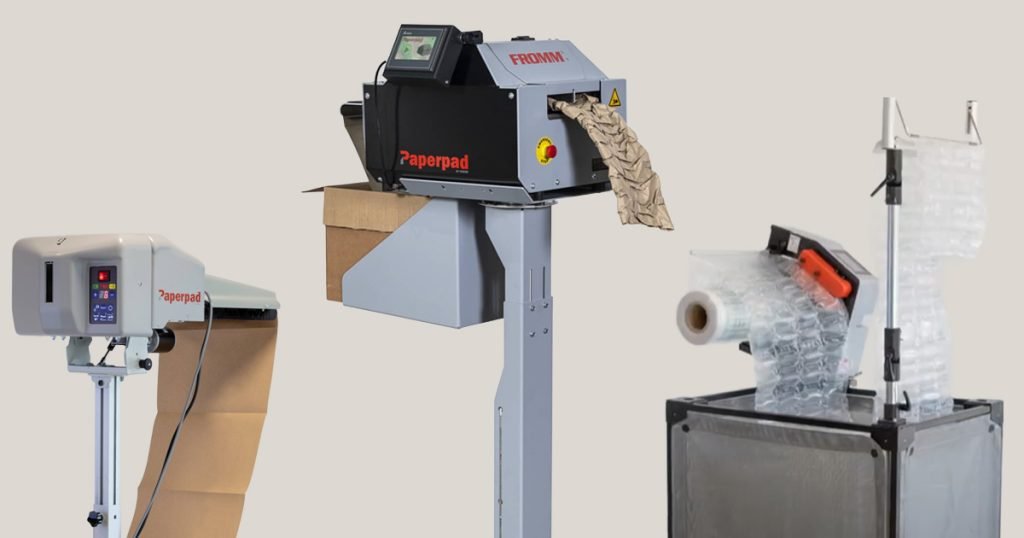
FROMM offers three void fill machines, two dedicated to paper and one (the AP1000) that can run both paper and air cushion film, each designed for different volumes and applications. Choosing the right machine ensures that your operation receives the speed, flexibility and cost efficiency it needs. Table 3 compares the PC100, PC1000 and AP1000 across key features.
Table 3: Comparison of FROMM void fill machines
| Feature | PC100 | PC1000 | AP1000 |
|---|---|---|---|
| Primary function | High-speed void fill | Compact paper cushioning | Fully automated void fill (paper pads or air cushions) |
| Ideal application | Filling large empty spaces in boxes | Protecting smaller, fragile products | High-volume operations with varied packaging |
| Output speed | ~60 m per minute | Adjustable up to 40 m per minute | High, continuous output for 300+ bundles/year |
| Design | Automatic cutting blade | Bladeless for safety and ergonomics | Automatic feed and cutting integrated into packing lines |
| Material options | Fanfold paper | Pre-folded paper rolls | Pre-folded paper rolls or air cushion film (PE, rPE, bio-based) |
| Volume threshold (annual bundles) | 150–300 | <150 | >300 |
| Best for | Distribution centres, high throughput | E-commerce and varied packaging needs | 3PLs, large warehouses, omni-channel retailers |
| Sustainability & ROI | 100 % recyclable paper; reduces paper use by up to 50 %; ROI measured as cost per box; ergonomic and compact | Same benefits; bladeless safety; efficient paper use | Supports recyclable paper and films with recycled or bio-based content; saves labour through automation; ROI via cost-per-box and labour efficiency |
The PC100 delivers high-speed void fill using fanfold paper and an automatic cutting blade, making it ideal for filling large empty spaces in boxes at medium to high volumes. The PC1000 uses pre-folded paper rolls to create compact pads at adjustable speeds up to 40 m/min; its bladeless design improves safety and ergonomics. The AP1000 automates void fill production, supplying either continuous paper pads or air pillows for operations shipping more than 300 bundles per year, and integrates seamlessly into packing lines. All machines support sustainable options, from 100% recyclable paper to air cushion films that include recycled or bio-based content, while delivering measurable ROI through cost-per-box calculations.
Industry Applications
Every industry has unique packaging challenges. In e‑commerce and subscription boxes, product assortments change daily, so a versatile machine like the PC1000 or AP1000 is essential. Beauty and skincare brands ship cosmetics and gift sets in long rectangular or medium cube boxes; these shipments require gentle cushioning and flexible volumes.
Pharmaceutical companies ship fragile vials and glass bottles that must arrive intact; using FROMM’s paper pads or air pillows helps prevent micro-fractures and ensures compliance with stringent health regulations.
Auto parts distributors ship heavy, irregularly shaped components that need high‑speed void fill to fill large spaces and maintain throughput; the PC100’s speed and automatic cutting provide a reliable solution.
Electronics manufacturers and retailers use flat screen and picture frame boxes; the PC1000’s compact pads or the AP1000’s air pillows protect screens without adding excess weight.
For third‑party logistics providers (3PLs) and high‑volume retailers, the AP1000’s automation reduces labour, keeps up with fast packing lines, and provides the flexibility to run either recyclable paper pads or air cushion films with recycled or bio-based content.
Sustainability Benefits
Businesses choosing sustainable void fill options, whether paper pads or air pillows with recycled or bio-based content, not only protect their products but also make significant sustainability gains. Plastic packaging is a major source of pollution, and the federal government will require plastic packaging to contain at least 50 % recycled content by 2030. Air cushion films available for FROMM machines already include recycled or bio-based content, helping companies align with these requirements. Paper void fill, in turn, is made from renewable fibres, is recyclable and can be composted in many municipal programs. Producing recycled paper uses about 60 % less energy than making new paper.
Paper pads and air pillows as sustainable options
Paper void fill from FROMM is FSC-certified and helps companies meet extended producer responsibility obligations. In addition, FROMM’s SmartFill technology reduces material consumption by up to 50 % and speeds packaging lines, cutting labour time by about four hours per thousand packs.
When combined with the national goal to reduce per‑person waste to 490 kg by 2030 and 350 kg by 2040, switching to paper void fill is an effective step toward a circular economy.
Frequently Asked Questions (FAQ)
How much void fill should I use for fragile items?
Use enough material to ensure that the product does not move inside the box. Wrap each item individually, add a protective layer around it and fill all empty space so nothing can shift during transport. Paper pads produced by the PC1000 or AP1000 are ideal for fragile items because they conform to irregular shapes, cushion against shocks and are available on demand in precise lengths. Air pillows can also provide excellent protection for lightweight, delicate items. Avoid overpacking, since too much filler can compress items or make the box bulge.
What’s the difference between void fill and cushioning?
Void fill refers to any material that fills empty space to prevent movement, while cushioning is designed to absorb shocks and protect delicate items. In practice, the same material can serve both purposes. For example, the PC100 produces long paper tubes that fill large gaps, while the PC1000 forms pads that both cushion fragile items and fill empty space. Air pillows created with the AP1000 can also serve as both void fill and cushioning. Choosing the right material for the product ensures optimal protection and efficient material use.
Is paper void fill recyclable in Canada?
Yes. FROMM’s paper void fill is made from 100 percent recycled paper and is widely accepted in curbside recycling programs. To recycle void fill, make sure the paper is clean and free of tape or labels, then place it with your paper recyclables. Using paper void fill helps businesses meet sustainability targets and reduces reliance on plastic.
How do I calculate ROI for a void fill machine?
Start by calculating your current cost per box, including packaging materials and labour. Then estimate the reduction in material use and labour time with a machine. FROMM’s SmartFill technology can cut material consumption by up to 50 percent and save about four hours of labour per thousand packs, which lowers your cost per box significantly. Choose a machine that matches your shipping volume: the PC1000 or AP1000 for fewer than 150 bundles per year, the PC100 for 150 to 300 bundles and the AP1000 for more than 300 bundles. Many operations achieve payback within a few months.
How do I choose the right void fill machine for my business?
Assess your daily and annual shipping volumes, the sizes of your boxes and the fragility of your products. If you ship fewer than 150 bundles a year and handle small or specialised boxes, the PC1000 or AP1000 provides flexible, on‑demand paper pads. If you ship 150–300 bundles a year and need high‑speed output for medium or large boxes, the PC100 is a cost‑effective solution. For operations shipping more than 300 bundles a year—such as third‑party logistics providers and busy distribution centres—the AP1000 offers fully automatic paper cushioning that integrates into packing lines. A FROMM specialist can help you calculate the ROI and specify the right configuration.
Conclusion
Getting void fill right is more than a packaging detail. It is a strategic decision that affects costs, customer satisfaction and environmental performance. By starting with the correct box size, calculating how much void fill you need and choosing the appropriate FROMM machine, you can protect your products, reduce waste and improve throughput. Both paper pads and air pillows provide sustainable options that align with Canadian recycling and waste-reduction targets, while also helping businesses stand out in a market that values responsible packaging.